Language documentation in Côte d'Ivoire
Much of my theoretical research relies on data collected through fieldwork abroad or locally. Since 2013, I have been working with the Guébie community (Kru) in southwest Côte d’Ivoire to document and describe the grammar of the language. I have led several field trips to Gnagbodougnoa, Côte d’Ivoire, funded by an NSF-DEL grant and an NSF CAREER grant. Together with my students, Ivoirian linguists, and Guébie native speakers, I am working to record a collection of Guébie texts and histories, many of which are available in the Guébie collection of the California Language Archive. Additionally, I have recorded and transcribed hundreds of hours of Guébie word lists and targeted elicitation tasks. This is important because prior to this project, the Guébie language was neither documented nor described. My work in the village of Gnagbodougnoa since 2014 has given me the opportunity to explore the phonology, morphology, and syntax of the language, in addition to learning to speak the language and experience Guébie culture first hand. As a highly tonal, mostly monosyllabic language, Guébie morphology tends to involve systematic phonological changes to verbal and nominal roots, rather than concatenation of roots with affixes. This characteristic of Guébie and other Kru languages is thoroughly investigated in my dissertation and subsequent work. I plan to continue documenting and describing the Guébie language and exploring its linguistic properties, at the same time working with the community to develop community-oriented language resources as desired. I am currently writing a grammar of the language.

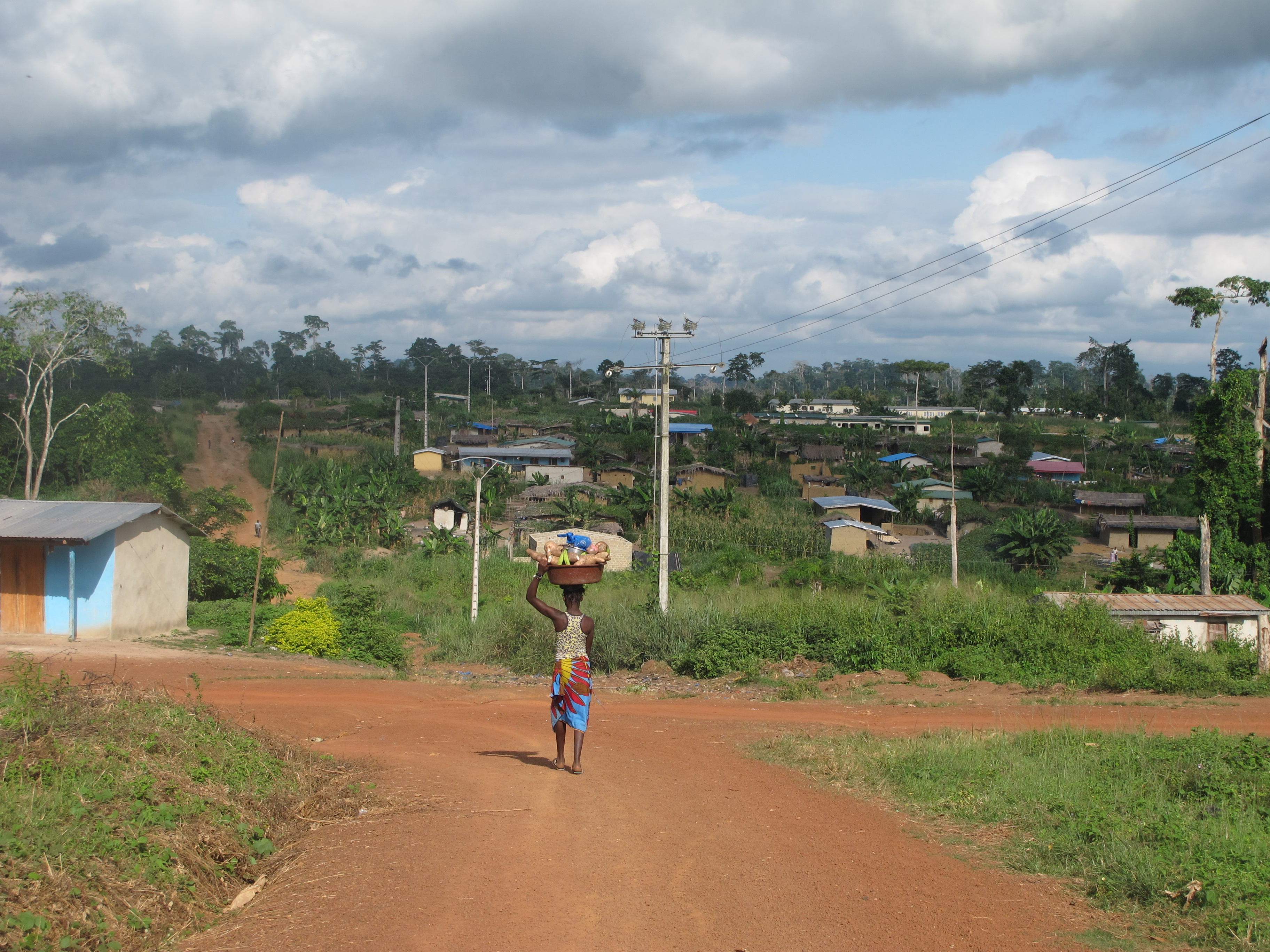

Documenting Guébie is also important for understanding the internal classification of Kru languages. Kru languages as a family are understudied, and the relationship between individual Kru languages is not well understood. Thorough documentation of Kru languages will contribute to a clearer picture of the Kru language-family tree.
In addition to my work with Guébie, I work to document other languages spoken in Côte d’Ivoire, namely Atchan (Kwa), Lobi (Gur/Mabia), Aizi (family unknown), and Nouchi (an urban contact language). From the US, I have worked with speakers of a number of other African languages on smaller-scale documentation projects, including Moro (Kordofanian), Dafing (Mande), Nobiin (Nilotic), Ga (Kwa), and Amharic (Ethio-Semitic).